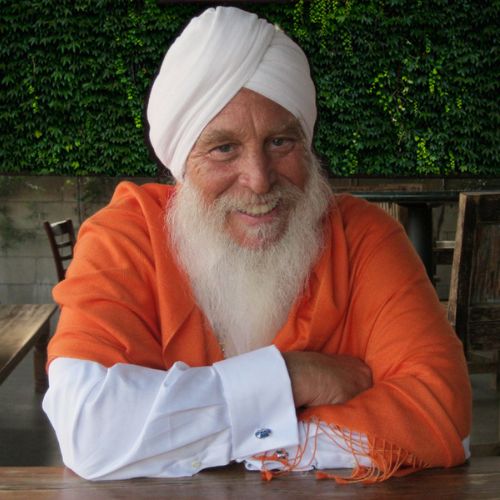
Dr. Dharma Singh Khalsa, M.D.

About Dr. Dharma

A life told in dates.

Thirty years of research, a foundation, and a practice he has kept every morning since 1978.

Every claim on this page carries a year, a journal, or a name. He never asked anyone to take his word for it.

How you live your life today may well determine how your brainpower and memory work tomorrow.

Dr. Dharma

The idea that changed everything

Your mind is more in your hands than they told you.

For most of medicine's history, the aging brain was regarded as a fixed fate. Dr. Dharma never believed that. His life's work rests on a more hopeful idea. That the way you live, eat, move, and rest shapes how your mind ages.

A measure of control, where everyone said there was none.

He has spent thirty years asking how much is still up to you.

His story

One photograph at a time.

One life, one idea, followed for more than thirty years.

Where it started

1978

Where it started

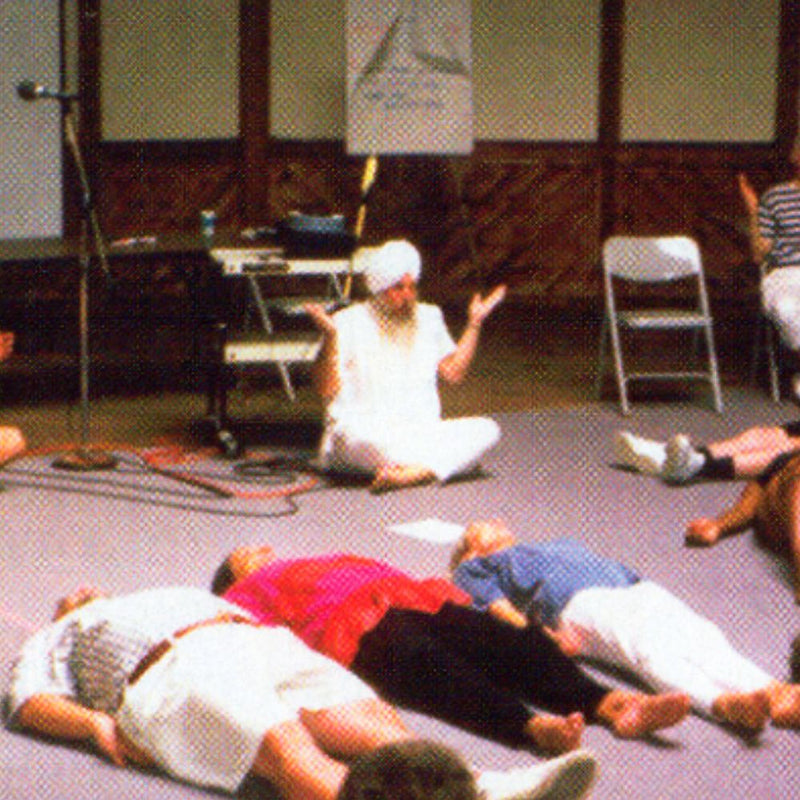
After his anesthesiology residency, a young doctor walked into a yoga class in New Mexico on a stranger's recommendation. He had struggled with focus his whole life. Within weeks of a daily practice, his own mind felt sharper and steadier than it ever had. That was the whole beginning. If how you live could change his brain, it could change anyone's.

A path he chose

1981

A path he chose

Two years into that practice, Dr. Dharma embraced the Sikh faith, and has kept it since. It came with a daily discipline of Kundalini yoga and meditation that he has never missed, through every clinic and every year that followed.

The first program

1987

The first program

The University of Arizona's teaching hospital in Phoenix recruited him to found its Acupuncture, Stress Medicine, and Chronic Pain program, one of the first complementary medicine pain programs in America. Acupuncture and nutrition on the same chart as anesthesia. It was an unusual thing to build inside a department of anesthesiology, and it worked.

The concentration killer

1990

The concentration killer

Running that clinic, he kept seeing stress steal his patients' sharpness. He chased the reason through the research and found it in the work of a Stanford neuroscientist. Cortisol, the hormone stress pours into the body, was starving the brain's memory center. He began calling chronic stress a physical force acting on memory, and he was saying it years before the rest of medicine caught up.

The foundation

1993

The foundation

He and his wife Kirti founded the Alzheimer's Research and Prevention Foundation, and he has led it as president and medical director ever since. For three decades it has funded peer reviewed research, trained practitioners, and carried brain health education into communities that rarely hear it. He was later invited to testify before Congress about the work.

The book

1997

The book

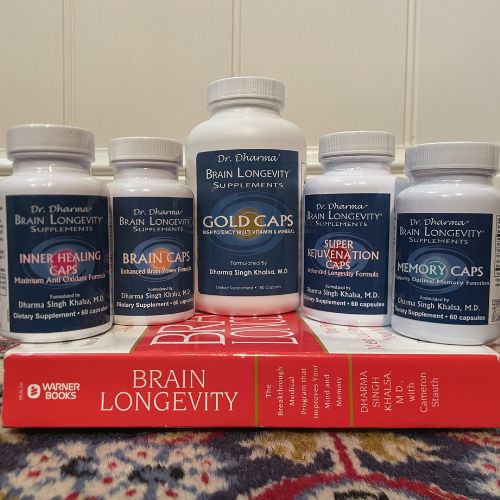
Warner Books published Brain Longevity, his argument that the aging brain deserved a real program rather than a shrug. More followed. Meditation as Medicine. Food as Medicine. The Pain Cure. He did not join the conversation about brain health. He started it, decades before it had one.

The formulas

2002

The formulas

The supplements he had formulated for his own patients went online for everyone else. They are still made to his original formulations. He still takes them himself, every day.

Congress asked him to explain

2003

Congress asked him to explain

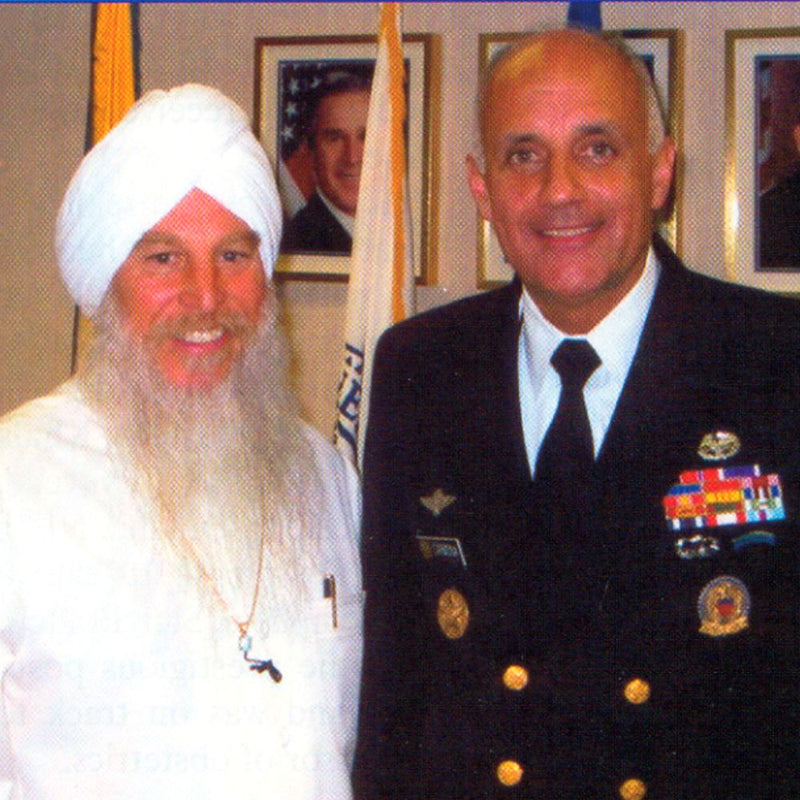
He testified before Congress on how the way we live shapes the aging mind. Afterward the Surgeon General, Richard Carmona, M.D., said his work in the field of memory loss should now be considered mainstream.

Put to the test

2011

Put to the test

The twelve minute meditation practice his foundation had studied for years went into randomized trials at UCLA, the University of Pennsylvania, and West Virginia University. Published, peer reviewed, and public. The idea he had lived since 1978 was now being measured by other people.

The partnership

Kirti

The partnership

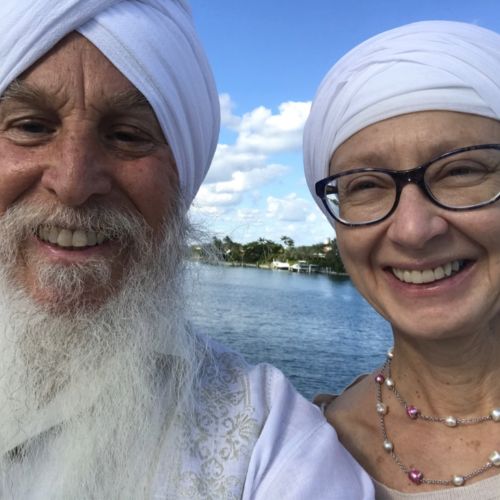
His wife Kirti spent decades teaching yoga and, before that, directing regulatory affairs inside a pharmaceutical company. She serves as the Foundation's chief executive alongside him. Between the two of them, they know both systems from the inside. Some partnerships get announced. This one just gets lived.

Still at it

Today

Still at it

Still writing, still teaching, still leading the Foundation, still practicing every morning. The question he started with in that first yoga class has never changed, and neither has his answer.

The meaning behind the name

What Dharma means

In the ancient traditions of the East, dharma is the path of righteous living. The quiet, steady road that brings your daily actions into harmony with your highest self. One road is reactive and bumpy. Dharma is the smooth road toward purpose, to act with integrity, to be of service, and to remember what matters most.

Dr. Dharma Singh Khalsa took his name in 1981, at a turning point in his life when he met the teacher who set him on this path. He was told the name meant a pure lion on a victorious path, one who fights like a lion for his destiny. Years later a Sikh elder offered him a deeper meaning. That dharma is one who always remembers God. He has carried that teaching in his work ever since.

That spirit runs through the rest of this story. To tend your mind and your body with attention is to live a small act of dharma, too.

Dharma is one who always remembers God.

A teaching Dr. Dharma carries to this day

Founded 1993

A foundation built to keep minds whole

1993
Founded the Foundation
President
And medical director, to today
3
Universities that studied its meditation research: UCLA, Penn, and West Virginia
30+
Years of funded research and education

The Alzheimer's Research and Prevention Foundation is the nonprofit Dr. Dharma founded in 1993, and he has served as its president and medical director ever since. For more than thirty years it has funded peer reviewed research, trained practitioners, and carried brain health education into communities that rarely hear it.

Its work rests on nourishment, stress reduction, physical and mental exercise, and a twelve minute meditation practice studied in randomized trials at UCLA, the University of Pennsylvania, and West Virginia University. Its educational framework is taught to professionals and to families.

The Foundation is a separate nonprofit. Its research describes the practices it studied, not any product sold here, and it does not endorse these formulas. Dr. Dharma Supplements donates two percent of sales to the Foundation each year. The two share a founder and a conviction, and nothing else.

Learn about the Foundation

The record

Published, peer reviewed, public

Do not take our word for any of this. The work lives in scientific journals with his name on it. Here is a sample you can look up tonight.

2011

Kirtan Kriya meditation: A promising technique for enhancing cognition in memory-impaired older adults

Enhancing Cognitive Fitness in Adults, Springer. Khalsa and Newberg.

2013

A pilot study of yogic meditation for family dementia caregivers with depressive symptoms

International Journal of Geriatric Psychiatry. Lavretsky, Epel, Siddarth and colleagues, with Khalsa.

2016

A randomized controlled trial of two simple mind-body programs, Kirtan Kriya meditation and music listening, in adults with subjective cognitive decline

Complementary Therapies in Medicine. Innes, Selfe, Khalsa and Kandati.

2021

Spiritual Fitness: A New Dimension in Alzheimer's Disease Prevention

Journal of Alzheimer's Disease. Khalsa and Newberg.

2021

Incorporating a Usual Care Comparator into a Study of Meditation and Music Listening for Older Adults with Subjective Cognitive Decline

Journal of Alzheimer's Disease Reports. Innes, Montgomery, Selfe, Wen, Khalsa and Flick.

The Alzheimer's Research and Prevention Foundation is an independent nonprofit organization. Research findings describe the studied practices and do not describe any product sold on this site.

These statements have not been evaluated by the Food and Drug Administration. These products are not intended to diagnose, treat, cure, or prevent any disease.


Where to begin

He takes them himself, every morning.

See the formulas